Introduction
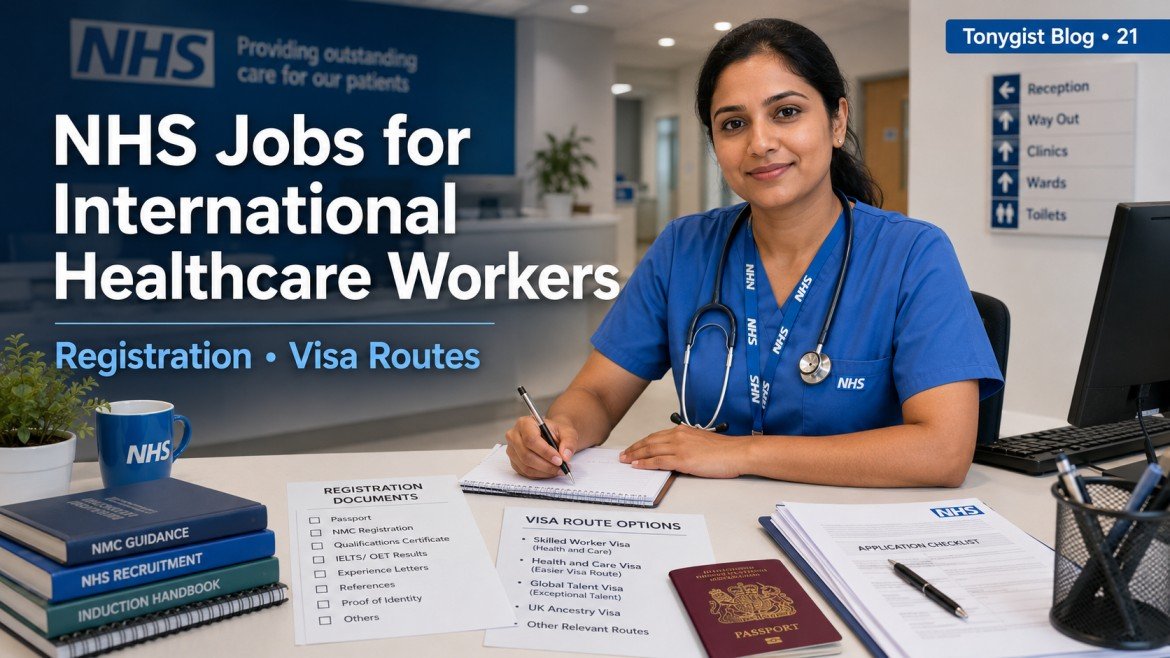
The National Health Service is one of the largest employers in the world, and it has relied on internationally trained healthcare professionals for decades to keep its hospitals, clinics, and community services running. For nurses, doctors, allied health professionals, and many other healthcare workers abroad, the NHS represents a genuine and well-established route into UK employment, but it is also a system with specific regulatory requirements that must be satisfied before you can actually start working.
This guide explains how NHS recruitment of international healthcare workers actually functions, what professional registration involves for different healthcare roles, which visa routes are relevant, and what realistic timelines and pay look like. The aim is to give you an accurate, practical understanding of the entire pathway rather than a simplified version that skips the regulatory steps that genuinely determine whether you can work.
NHS recruitment practices, professional registration requirements, and visa rules all change over time and differ by profession. Always verify current details directly through the relevant UK regulatory body for your specific profession and through the official UK government website before making decisions.
Table of Contents
- Why the NHS Recruits Internationally
- Professional Regulation: The Step That Comes Before Any Job
- Nursing and Midwifery: NMC Registration Explained
- Doctors: GMC Registration and the Routes Available
- Allied Health Professionals: HCPC Registration
- Pharmacists and the GPhC Registration Process
- The Health and Care Worker Visa Explained
- How NHS Trusts Actually Recruit Internationally
- International Recruitment Agencies and the NHS Code of Practice
- Realistic Pay Across NHS Healthcare Roles
- What Happens Once You Arrive: Induction and Pastoral Support
- Key Things to Know
- Common Mistakes to Avoid
- Practical Tips
- Frequently Asked Questions
- Conclusion
Why the NHS Recruits Internationally
The NHS has faced sustained workforce shortages across nursing, medicine, and several allied health professions for years, driven by a combination of an aging healthcare workforce, growing demand for services, and a domestic training pipeline that has not always kept pace with need. This has led to active, structured international recruitment efforts by individual NHS trusts and, at a national level, coordinated recruitment campaigns in specific shortage professions.
This demand is genuine and well documented, but it operates within a healthcare system that is, appropriately, tightly regulated. Every healthcare profession in the UK has its own statutory regulator, and registering with that regulator is a separate, mandatory step that exists independently of any specific job offer or visa application.
Professional Regulation: The Step That Comes Before Any Job
This is the single most important concept to understand before pursuing any NHS role, regardless of profession.
In the UK, most healthcare professions are protected titles, meaning you cannot legally practice or use that professional title without being registered with the relevant statutory regulator. This applies equally to UK-trained professionals and those trained overseas, and there is no exception for international applicants simply because an NHS trust wants to employ them.
This means your professional registration process and your job search can and often should run in parallel, but registration itself is not optional, and an NHS trust cannot legally employ you in a registered role until your registration is confirmed, regardless of how strong your qualifications or experience are.
Nursing and Midwifery: NMC Registration Explained
The Nursing and Midwifery Council (NMC) is the statutory regulator for nurses, midwives, and nursing associates in the UK, and internationally trained nurses must go through a specific registration process before they can practice.
The Core Steps for Overseas Nurses
The process generally involves submitting an application with your qualification and registration evidence from your training country, completing a Computer Based Test (CBT) assessing your nursing knowledge, and completing an Objective Structured Clinical Examination (OSCE), a practical assessment of your clinical skills, which must be taken at an approved test centre.
English Language Requirements
The NMC requires evidence of English language proficiency through an approved test, generally IELTS Academic or OET (Occupational English Test), with minimum scores set by the NMC across each component. These requirements are reviewed periodically, so checking the current minimum scores directly through the NMC’s official guidance before testing is essential.
Processing Realities
The combined process of document verification, the CBT, and the OSCE takes genuine time, often several months when you account for test centre availability and processing stages. Many internationally recruited nurses begin this process before they have a confirmed NHS job offer, since having your registration progressing or completed strengthens your position when applying to NHS trusts.
Doctors: GMC Registration and the Routes Available
The General Medical Council (GMC) regulates doctors in the UK, and the registration pathway for internationally trained doctors depends significantly on where you trained and your specific qualifications.
The PLAB Route
For doctors whose medical qualification is not automatically recognised, the Professional and Linguistic Assessments Board (PLAB) test is the most common route to demonstrating that your knowledge and skills meet the standard required to practice in the UK. This involves two parts: a written knowledge test and a practical clinical skills assessment.
Alternative Routes for Some Qualifications
Doctors from certain countries or with certain postgraduate qualifications recognised by the GMC may be eligible for registration through routes other than PLAB, depending on current GMC policy regarding which overseas qualifications and training pathways are recognised. This is an area where requirements are specific to your country of training and qualification, so checking your individual eligibility directly through the GMC is necessary rather than assuming a particular route applies to you.
English Language and Additional Requirements
Similar to nursing, doctors must demonstrate English language proficiency through an approved test, and depending on your specific specialty and career stage, additional requirements around postgraduate qualifications or specialist registration may apply if you intend to practice in a specific specialty rather than general roles.
Allied Health Professionals: HCPC Registration
The Health and Care Professions Council (HCPC) regulates a wide range of allied health professions relevant to NHS employment, including physiotherapists, occupational therapists, radiographers, paramedics, speech and language therapists, and social workers, among others.
How the International Application Process Works
For each of these professions, the HCPC assesses your overseas qualification and training against the Standards of Proficiency expected of UK-trained professionals in that specific field. This generally involves submitting detailed documentation about your training programme’s content and structure, along with evidence of your professional standing in your training country.
Possible Outcomes
Depending on how closely your training aligns with UK standards, the HCPC may grant registration directly, may require a period of supervised practice to address identified gaps, or in some cases may identify gaps that require further study or assessment before registration can be granted. This varies by individual application and profession, so it is not possible to predict a specific outcome in advance.
Pharmacists and the GPhC Registration Process
The General Pharmaceutical Council (GPhC) regulates pharmacists and pharmacy technicians in the UK, and internationally trained pharmacists must complete a specific registration assessment process recognised by the GPhC before they can practice.
This generally involves a structured assessment of your pharmaceutical knowledge and, depending on your qualification and experience, may involve a period of supervised practice before full registration is granted. As with other professions, this process should be researched and, where possible, initiated independently of your job search, since NHS pharmacy departments will require confirmed or clearly progressing registration before employment can proceed.
The Health and Care Worker Visa Explained
Once your professional registration is confirmed or clearly on track, the Health and Care Worker Visa is the visa category most directly relevant to NHS employment for most clinical roles.
Why This Visa Differs From the Standard Skilled Worker Visa
The Health and Care Worker Visa is a specific sub-category of the Skilled Worker Visa designed for eligible healthcare and care roles, and it generally carries certain advantages compared to the standard route, including a reduced application fee and, depending on current policy, an exemption from the Immigration Health Surcharge for the main applicant and dependants.
What the Visa Requires
Like the standard Skilled Worker Visa, this route requires a confirmed job offer from an employer holding a valid Home Office Sponsor Licence, with the role meeting the relevant salary threshold and occupational classification. NHS trusts themselves typically hold sponsor licences, since international recruitment is a core part of their workforce strategy, but you should still verify a specific trust’s sponsor status independently rather than assuming.
The Certificate of Sponsorship Process
Once an NHS trust confirms your job offer, they issue a Certificate of Sponsorship containing your role, salary, and employment details, which you then use as part of your visa application. This process generally cannot begin until your professional registration is sufficiently confirmed, since the job offer itself is typically contingent on this.
How NHS Trusts Actually Recruit Internationally
NHS trusts use several different channels to recruit internationally, and understanding these helps you focus your search effectively.
Direct Trust Recruitment
Many larger NHS trusts have dedicated international recruitment teams that manage their own overseas hiring campaigns, sometimes including in-person or virtual recruitment events held in specific countries, and direct partnerships with overseas nursing or medical schools and professional bodies.
NHS England Coordinated Programmes
At various points, NHS England has coordinated specific national or regional ethical international recruitment programmes, particularly for nursing, working with specific partner countries under formal agreements. These programmes are designed to ensure recruitment happens ethically and does not draw excessively from countries facing their own healthcare workforce shortages, and current programme partnerships and country agreements should be checked directly, since these arrangements are reviewed periodically.
Specialist Recruitment Agencies
Some international healthcare recruitment happens through specialist agencies that work directly with NHS trusts under formal contracts. Legitimate agencies in this space typically charge fees to the NHS trust rather than to the individual healthcare worker, and any agency asking you to pay a significant fee to secure an NHS role should be researched very carefully before you proceed.
International Recruitment Agencies and the NHS Code of Practice
The NHS operates under a Code of Practice for International Recruitment, which sets ethical standards for how NHS organisations and their recruitment partners should conduct international healthcare recruitment.
What the Code Generally Covers
This code addresses issues including not actively recruiting from countries on a specific “red list” facing their own critical health workforce shortages (except under specific government-to-government agreements), and setting standards for how recruitment agencies working with the NHS should treat candidates, including transparency around costs and terms.
Why This Matters for You
If you are approached by a recruitment agency claiming to place candidates into NHS roles, you can reasonably ask whether they operate in compliance with this code of practice, and you should be cautious of any agency or individual that asks you to pay substantial fees for “guaranteed” NHS placement, since this does not reflect how legitimate, code-compliant recruitment in this space typically operates.
Realistic Pay Across NHS Healthcare Roles
NHS pay in England, Wales, and (with some variation) Northern Ireland generally follows the NHS Agenda for Change pay structure, a banded national pay scale that applies to most non-medical NHS staff, including nurses and most allied health professionals. Scotland has its own pay arrangements that broadly follow similar principles.
Nursing Pay
Newly registered nurses in the NHS typically start within the lower bands of the Agenda for Change structure, with pay increasing through incremental pay points within that band and through progression to higher bands as you gain experience, take on more senior responsibilities, or move into specialist or management roles.
Allied Health Professional Pay
Allied health professionals, including physiotherapists, occupational therapists, and radiographers, are also paid through the Agenda for Change structure, generally starting at a similar entry band to newly registered nurses, with similar incremental progression based on experience and responsibility.
Doctor Pay
Doctors are paid under a separate, specific pay structure reflecting their training grade, from foundation doctors through to specialty registrars and consultants, with pay increasing significantly at each stage of progression through medical training and into senior consultant roles.
Because these pay structures are reviewed and updated periodically through national pay negotiations, always check the current Agenda for Change pay bands or medical pay scales directly through NHS Employers or the relevant official source for the most accurate, up-to-date figures.
What Happens Once You Arrive: Induction and Pastoral Support
Many NHS trusts, particularly those with established international recruitment programmes, provide structured induction support for newly arrived international staff, recognising that adapting to UK healthcare systems, documentation practices, and workplace culture takes genuine time.
This support can include orientation programmes covering UK clinical documentation and protocols, pastoral support helping with practical settling-in matters like opening a bank account or registering with a GP, and in some cases, structured mentorship periods pairing new international staff with experienced colleagues. The extent and quality of this support varies meaningfully between trusts, and asking about it specifically during recruitment conversations is a reasonable and useful question.
Key Things to Know
Professional registration with the relevant UK regulator (NMC, GMC, HCPC, or GPhC depending on your profession) is mandatory and entirely separate from any job offer or visa application.
The Health and Care Worker Visa is the most relevant route for most NHS clinical roles and offers some advantages over the standard Skilled Worker Visa, though it still requires a genuine job offer from a licensed sponsor.
NHS trusts typically hold sponsor licences, but this should be verified independently for any specific trust rather than assumed.
The NHS Code of Practice for International Recruitment sets ethical standards for recruitment, including restrictions on recruiting from certain countries facing critical shortages.
Pay across most non-medical NHS roles follows the Agenda for Change national pay structure, with doctors paid under a separate scale tied to training grade.
Common Mistakes to Avoid
Assuming a job offer from an NHS trust means you can start working immediately, when professional registration with your relevant regulator must be confirmed first in almost all cases.
Underestimating how long professional registration processes (NMC’s CBT and OSCE, GMC’s PLAB, HCPC assessment) genuinely take, and making firm relocation plans before either process is confirmed.
Paying significant fees to a recruitment agency claiming to guarantee NHS placement, when legitimate agencies operating under the NHS Code of Practice typically charge fees to the employing trust rather than the candidate.
Not verifying whether a specific NHS trust holds a valid sponsor licence before investing significant time pursuing a role there.
Treating registration and visa processes as a single combined step, when they are separate, sequential processes that each have their own requirements and timelines.
Practical Tips
Begin your professional registration process with the relevant UK regulator as early as possible, ideally running it in parallel with your job search rather than waiting for a confirmed offer first.
Research which specific NHS trusts have established international recruitment programmes and dedicated support for overseas staff, since these trusts often have more experience and infrastructure to support your transition.
Ask any recruitment agency directly whether they operate in compliance with the NHS Code of Practice for International Recruitment, and be cautious of any agency requesting substantial fees from you personally.
Check current English language test requirements for your specific profession and regulator well before booking any test, since minimum scores are reviewed periodically.
Ask prospective NHS employers specifically what induction and pastoral support they offer to newly arrived international staff, since this varies considerably between trusts.
Frequently Asked Questions
1. Can I apply for NHS jobs before completing my professional registration?
You can generally apply and interview for roles, but most NHS trusts cannot confirm a firm job offer or proceed with visa sponsorship until your professional registration is confirmed or very close to completion, since employment in most clinical roles legally requires this registration.
2. How long does NMC registration take for overseas-trained nurses?
This varies depending on document verification, test centre availability for the OSCE, and individual circumstances, but it commonly takes several months overall. Always check current estimated timelines directly through the NMC.
3. Does the Health and Care Worker Visa cost less than the standard Skilled Worker Visa?
It generally does, and depending on current policy, may also carry an exemption from the Immigration Health Surcharge for the main applicant and dependants. Always verify the current fee structure and any exemptions through the official UK government website, since this is reviewed periodically.
4. What is PLAB and do all overseas doctors need to take it?
PLAB is the standard route for many internationally trained doctors to demonstrate their knowledge and skills meet UK standards, but not all overseas doctors require it, since some qualifications or postgraduate training pathways are recognised through alternative GMC routes. Check your individual eligibility directly through the GMC.
5. Are all NHS trusts licensed to sponsor international healthcare workers?
Most are, since international recruitment is a significant part of NHS workforce strategy, but you should still verify a specific trust’s sponsor licence status independently rather than assuming, since this can vary.
6. What is the NHS Code of Practice for International Recruitment?
It is a set of ethical standards governing how NHS organisations and their recruitment partners conduct international healthcare recruitment, including restrictions on recruiting from certain countries facing critical health workforce shortages, except under specific government agreements.
7. How is NHS pay structured for nurses and allied health professionals?
Most non-medical NHS staff, including nurses and most allied health professionals, are paid through the Agenda for Change national pay banding structure, with pay increasing through incremental points and band progression based on experience and responsibility.
8. Do doctors get paid differently from nurses in the NHS?
Yes. Doctors are paid under a separate pay structure tied to their specific training grade, from foundation doctor through to consultant level, rather than the Agenda for Change bands that apply to most other NHS staff.
9. Should I pay a recruitment agency to help me get an NHS job?
Be cautious. Legitimate agencies working within the NHS Code of Practice typically charge fees to the employing NHS trust rather than to individual candidates. Any agency asking you for substantial payment to secure or guarantee an NHS role should be researched thoroughly before you proceed.
10. What support do NHS trusts typically offer newly arrived international staff?
This varies by trust, but established international recruitment programmes often include structured induction covering UK clinical practices, pastoral support for practical settling-in matters, and sometimes formal mentorship periods. Asking about this directly during recruitment is a reasonable step.
Conclusion
NHS jobs for international healthcare workers represent a genuine and well-established pathway into UK employment, supported by structured visa routes and, in many trusts, dedicated international recruitment infrastructure. But the path runs through mandatory professional registration with your specific regulator first, whether that is the NMC, GMC, HCPC, or GPhC, and this step cannot be skipped or expedited regardless of how strong a job offer might be.
Approaching this process by starting your registration early, verifying any NHS trust’s sponsor status and any recruitment agency’s ethical standing independently, and understanding the realistic timeline involved will put you in a far stronger position than assuming registration and employment happen automatically together. The NHS genuinely needs internationally trained healthcare professionals, and for those who navigate the regulatory steps properly, it offers a structured and rewarding route into UK healthcare practice.