Introduction
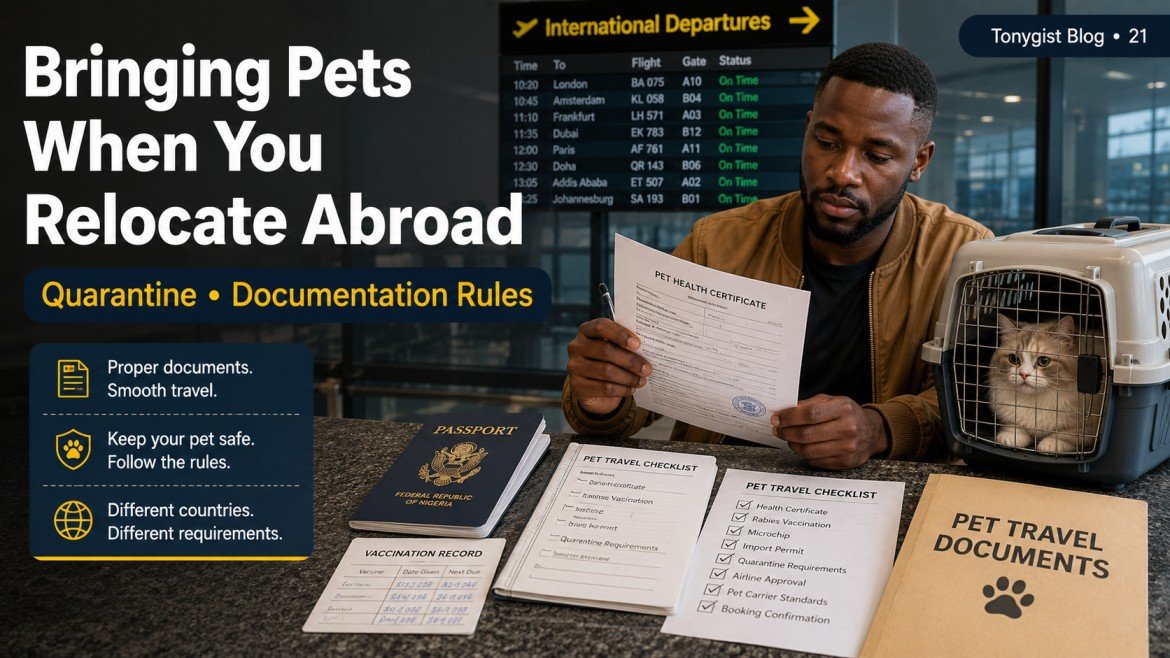
For many people relocating abroad, leaving a pet behind isn’t really an option worth considering. But moving a cat or dog internationally involves considerably more paperwork, planning, and lead time than most people expect, and the requirements differ so much from country to country that what worked for a friend moving to one destination may have almost nothing in common with what you’ll need for another.
This article walks through how international pet relocation generally works: the documentation almost every country requires in some form, what microchipping and rabies vaccination timing rules typically involve, how quarantine requirements differ between countries (and why some have none at all while others are stricter), and the practical steps that genuinely reduce stress for both you and your animal during the move.
Because pet import requirements are set independently by each country’s veterinary or agricultural authority and are reviewed and changed periodically, this article focuses on the general patterns that apply broadly, while being clear that you must verify the specific, current requirements for your exact destination country directly through that country’s official government or veterinary authority well before you travel.
Table of Contents
- Why Pet Relocation Rules Vary So Much by Country
- Microchipping: The Universal Starting Point
- Rabies Vaccination and Why Timing Matters So Much
- The Rabies Titer Test and Waiting Period Explained
- Quarantine: Why Some Countries Require It and Others Don’t
- Health Certificates and Veterinary Documentation
- Choosing the Right Airline and Travel Method
- Breed and Species Restrictions You Need to Know About
- Costs You Should Budget For
- Settling Your Pet In After Arrival
- Key Things to Know
- Common Mistakes to Avoid
- Practical Tips
- Frequently Asked Questions
- Conclusion
Why Pet Relocation Rules Vary So Much by Country
Every country sets its own pet import rules independently, based largely on its own assessment of disease risk, most importantly rabies, but also other diseases depending on the region and species involved. This is why the process for moving a dog from one country to another can be completely different depending on both your origin and destination, even for what seems like a similar trip.
Countries that are officially rabies-free or have a very low risk status, including several island nations, tend to have the strictest import requirements, since they have a strong interest in keeping that status. Countries with a higher background rate of rabies in the wildlife or domestic animal population, or that are part of a regional system like the EU’s pet travel scheme, tend to have more standardized, less restrictive requirements, especially for pets coming from within that same regional bloc.
This single distinction, rabies-free or low-risk destination versus rabies-endemic destination, explains most of the variation you’ll encounter in your own research, and it’s the first thing worth identifying about your specific destination country before you plan anything else.
Microchipping: The Universal Starting Point
Regardless of which country you’re moving to, microchipping your pet is very close to a universal requirement, and it’s also the step that needs to happen earliest in your timeline, since several other requirements depend on it.
Why Microchip Timing and Type Matter
Most countries require the microchip to be implanted before certain other procedures, most importantly the rabies vaccination, since the microchip number needs to be clearly linked to your pet’s vaccination and health records from that point forward. If you vaccinate your pet before microchipping, many countries will not accept that vaccination as valid for import purposes, and you may need to repeat it after the chip is implanted.
The specific microchip standard also matters. Many countries, particularly those following EU-aligned rules, require an ISO-compliant microchip (typically ISO 11784/11785 standard). If your pet already has an older or non-compliant microchip from a previous country of residence, you may need either a compatible scanner brought to every official check, or in some cases, an additional ISO-compliant chip implanted alongside the existing one.
Why This Should Be Your First Call to a Vet
Because the sequencing of microchip, then vaccination, then other tests is so consistently important across different countries’ rules, confirming your pet’s microchip status and standard compliance should be one of the very first things you do once relocation becomes a real possibility, well before you’ve finalized your departure date.
Rabies Vaccination and Why Timing Matters So Much
After microchipping, rabies vaccination is the next near-universal requirement, but the timing rules around it trip up more pet owners than almost any other part of this process.
The Waiting Period After Vaccination
Most countries require a minimum waiting period between the rabies vaccination and travel, commonly at least 21 days, though this can vary, and this waiting period generally only applies validly if the vaccination was given after the microchip was implanted. This means if you vaccinate too early, before microchipping, or too close to your travel date, you may need to repeat the vaccination and restart the waiting period.
Vaccination Validity Periods
Rabies vaccines typically remain valid for either one year or three years, depending on the specific vaccine product used and the country’s own recognition rules, and some countries only recognize specific vaccine brands or types as valid for import purposes. If your pet’s vaccination is close to expiring relative to your travel date, you’ll likely need a booster well in advance, factoring in the waiting period that follows.
The Rabies Titer Test and Waiting Period Explained
For pets traveling to certain rabies-free or low-risk countries, a rabies antibody titer test (often called the FAVN test) is required in addition to the vaccination itself, and this is one of the most time-consuming parts of the entire process.
What This Test Actually Checks
The titer test measures the level of rabies antibodies in your pet’s blood, confirming that the vaccination has produced an adequate immune response, rather than simply confirming that a vaccine was administered.
The Waiting Period This Test Creates
Many countries that require a titer test also require a waiting period of several months after the test was successfully completed before your pet can actually enter the country, sometimes three months or more. Combined with the vaccination timing requirements before the test can even be conducted, this single requirement can add several months to your overall preparation timeline if your destination country requires it.
Why This Step Alone Justifies Planning Many Months Ahead
If you discover partway through planning your relocation that your destination requires a titer test and an extended waiting period afterward, and you haven’t already had this done, it can genuinely delay your pet’s ability to travel with you, sometimes forcing a separate, later travel date for your animal. This is the single biggest reason pet relocation planning needs to start as early as possible, ideally as soon as international relocation becomes a realistic plan, rather than waiting until your own travel and visa plans are finalized.
Quarantine: Why Some Countries Require It and Others Don’t
Quarantine is probably the most feared part of pet relocation, but it’s also one of the most variable, and modern documentation-based systems have reduced or eliminated quarantine requirements for many routes that previously required it.
The Documentation-Based Alternative to Quarantine
Many countries now operate on a system where, if you complete all the required steps (microchipping, vaccination, titer testing where required, and the associated waiting periods) correctly and provide proper documentation, your pet can enter without any quarantine period at all, or with only a very brief period of monitoring rather than a lengthy isolation.
When Quarantine Is Still Required
Quarantine becomes more likely, or sometimes still mandatory, if you haven’t completed the required steps in advance, if you’re traveling from a country considered higher risk for rabies or other diseases relevant to your destination, or if your destination country simply maintains a more conservative, blanket quarantine policy regardless of your pet’s individual documentation.
Why Planning Ahead Specifically Avoids Quarantine
In most cases where quarantine is avoidable through proper preparation, the entire point of completing microchipping, vaccination, and any required titer testing well in advance is specifically to qualify for the documentation-based entry pathway rather than the quarantine pathway. This is yet another reason the early planning emphasized throughout this article matters so much, since starting late often means quarantine becomes the only realistic option, even in countries where it’s avoidable in principle.
Health Certificates and Veterinary Documentation
Beyond microchipping and vaccination records, most countries require an official health certificate completed by a licensed veterinarian shortly before travel.
What a Health Certificate Generally Covers
This document typically confirms your pet has been examined and found fit to travel, free of obvious signs of infectious disease, and sometimes requires confirmation of specific additional treatments, such as tick and tapeworm treatment, depending on the destination country’s specific concerns.
Government Endorsement Requirements
Many countries require this veterinary health certificate to be additionally endorsed or stamped by a government veterinary authority (sometimes called an official government vet or a USDA-accredited vet in the case of US exports, or the equivalent body in other countries) before it’s considered valid for import purposes. This endorsement step often has its own specific timing window relative to your travel date, commonly requiring the certificate to be issued and endorsed within a certain number of days before departure, which means it cannot be done too far in advance.
Choosing the Right Airline and Travel Method
How your pet actually travels is a separate practical question from the regulatory documentation, but it significantly affects both cost and stress levels for your animal.
In-Cabin vs Cargo Travel
Smaller pets that fit in an approved carrier under the seat in front of you may be eligible to travel in the cabin with you, depending on the specific airline’s policy and the destination country’s rules. Larger pets generally need to travel as manifest cargo or as checked baggage (where airlines still offer this option), which involves different booking processes, costs, and climate and safety considerations.
Airline-Specific Pet Policies
Each airline sets its own pet travel policies, including breed restrictions (discussed further below), temperature restrictions for cargo travel during very hot or cold periods, and specific crate or carrier requirements. These policies can differ even between airlines flying the exact same route, so comparing several airlines’ specific pet policies, rather than assuming they’re all similar, is a worthwhile step.
Breed and Species Restrictions You Need to Know About
Some countries and airlines impose specific restrictions that go beyond general documentation requirements, and these can affect whether your specific pet can travel at all on certain routes.
Brachycephalic (Flat-Faced) Breed Restrictions
Many airlines restrict or refuse cargo travel for brachycephalic dog and cat breeds (such as bulldogs, pugs, and similar flat-faced breeds), due to the increased health risks these breeds face during air travel, particularly related to breathing difficulties under stress or in temperature-controlled cargo holds. Some airlines apply this restriction to cargo travel only, while still permitting in-cabin travel for smaller individuals of these breeds, so checking the airline’s specific policy for your particular breed is important.
Country-Specific Breed Bans
Separately from airline policy, some countries restrict or ban the import of certain dog breeds entirely, often breeds classified in that country as a banned or restricted “dangerous dog” category. This is a country-level legal restriction, completely separate from airline policy, and it means that even if you find an airline willing to transport your specific breed, the destination country itself may simply refuse entry.
Costs You Should Budget For
International pet relocation involves a combination of veterinary costs, government fees, and travel costs, and the total can be a genuinely significant expense that’s worth planning for financially well in advance.
Veterinary costs include the microchip implantation if not already done, the rabies vaccination or booster, the titer test where required (which is often one of the more expensive individual steps), and the final health certificate examination and any required treatments.
Government and administrative costs include import permit fees where required, health certificate endorsement fees, and in some cases, fees associated with any quarantine period if one applies.
Travel costs include the airline’s pet travel fee (which varies enormously depending on whether your pet travels in-cabin or as cargo, and depending on size and weight), the cost of an approved travel crate that meets airline and destination country specifications, and potentially the cost of a professional pet relocation service if you choose to use one rather than managing the process entirely yourself.
Settling Your Pet In After Arrival
The regulatory process is only part of the picture. Helping your pet adjust to a new country, climate, and home environment matters just as much for their wellbeing.
International travel, even when handled carefully, is stressful for most animals, and giving your pet time to decompress in a calm, familiar-feeling environment once you arrive, rather than immediately introducing them to a large new home, new people, or other pets, generally supports a smoother adjustment.
Registering with a local veterinarian shortly after arrival, even before anything seems wrong, means you already have an established relationship and records in place if you do need care, and it’s also often required for ongoing local pet registration or licensing in many countries.
Researching local pet registration or licensing requirements, which are often separate from the import documentation you needed for travel itself, ensures you remain compliant with local rules once you’ve settled in, since many countries and cities require pets to be registered locally regardless of their import status.
Key Things to Know
Microchipping generally needs to happen before rabies vaccination, since most countries link the validity of the vaccination to a microchip implanted beforehand.
Rabies titer tests, where required, often come with an extended waiting period afterward, sometimes adding several months to your overall preparation timeline.
Many countries now operate documentation-based entry systems that avoid quarantine entirely, but only if all required steps are completed correctly and in the right order well in advance.
Health certificates from your veterinarian often need government endorsement and have a specific, limited validity window relative to your travel date.
Airline pet policies and country-level breed restrictions are separate from each other, and you may need to satisfy both before your specific pet can travel on a given route.
Common Mistakes to Avoid
Vaccinating your pet against rabies before microchipping, which often invalidates the vaccination for import purposes and forces you to repeat it after the chip is implanted.
Starting the process too close to your intended travel date, particularly when a titer test and its extended waiting period are required by your destination country.
Assuming quarantine rules are the same across all countries, when documentation-based entry without quarantine is increasingly common for properly prepared pets.
Booking your own flight before confirming your specific airline’s pet travel policy and your destination country’s rules, especially for larger pets or specific breeds.
Letting a health certificate’s validity window lapse by getting it completed too early relative to your actual travel date.
Practical Tips
Contact your veterinarian as soon as international relocation becomes a real possibility, specifically to confirm your pet’s microchip compliance and to map out the correct sequence and timing of vaccination and any required testing for your specific destination.
Research your destination country’s official government or veterinary authority website directly for current pet import requirements, rather than relying solely on general articles or older information from other pet owners who may have moved under different rules.
If a titer test is required, get it done as early as realistically possible, since the waiting period that follows is often the single longest fixed delay in the entire process.
Compare specific pet policies across multiple airlines serving your route, rather than assuming all airlines treat pet travel, breed restrictions, and crate requirements the same way.
Budget generously and early for the combined veterinary, administrative, and travel costs involved, since unexpected expenses in this process are common, particularly around crate requirements and cargo travel fees.
Frequently Asked Questions
1. Does my pet need to be microchipped before vaccination for international travel?
In most cases, yes. Most countries require the microchip to be implanted before the rabies vaccination, since the vaccination’s validity for import purposes is generally linked to a microchip number recorded at the time of vaccination.
2. What is a rabies titer test and why do some countries require it?
It’s a blood test confirming your pet’s rabies antibody levels are sufficient, used by certain rabies-free or low-risk countries as additional assurance beyond the vaccination record alone. It often comes with an extended waiting period after the test before travel is permitted.
3. Will my pet have to go into quarantine when I relocate abroad?
It depends entirely on your destination country and whether you’ve completed all required documentation steps correctly and within the right timeframes. Many countries now avoid quarantine entirely for properly prepared pets, while others still require it under certain circumstances.
4. How early should I start planning my pet’s international relocation?
As early as possible, ideally as soon as international relocation becomes a realistic plan. If your destination requires a rabies titer test, the waiting period afterward alone can take several months, so starting late significantly increases the risk of delays or an enforced quarantine period.
5. Can all dog breeds travel internationally by air?
Not necessarily. Many airlines restrict or refuse cargo travel for brachycephalic (flat-faced) breeds due to health risks, and some countries separately ban the import of specific breeds entirely under local dangerous dog legislation, regardless of airline policy.
6. Does my pet’s microchip need to meet a specific standard?
Often, yes, particularly an ISO 11784/11785 compliant chip for countries following EU-aligned import rules. If your pet has an older or non-compliant chip, you may need a compatible scanner available at checks or an additional compliant chip implanted.
7. How long is a pet health certificate valid for international travel?
This varies by destination country, but many require the certificate to be issued and government-endorsed within a specific, fairly short window before travel, commonly within a set number of days. Getting it done too early can mean it’s no longer valid by your actual travel date.
8. Can my pet travel in the cabin with me on an international flight?
This depends on your pet’s size, the specific airline’s policy, and your destination country’s rules. Smaller pets in an approved carrier may qualify for in-cabin travel on some airlines and routes, while larger pets generally need to travel as cargo or checked baggage.
9. What happens if I don’t complete all the required steps before traveling?
Depending on the destination country’s rules, your pet may be denied entry, required to undergo quarantine on arrival, or in some cases need to be sent back, which is why completing every required step correctly and within the right timeframe before travel is so important.
10. Are pet relocation services worth using instead of managing the process myself?
This depends on your comfort level with coordinating veterinary timing, documentation, and travel logistics yourself. Professional pet relocation services can manage much of this complexity for a fee, which some owners find worthwhile, particularly for more complex routes or tighter timelines, while others are comfortable managing the process independently with good early planning.
Conclusion
Relocating internationally with a pet is genuinely achievable for the vast majority of routes and destinations, but it requires far more advance planning than most people expect, largely because of how strictly sequenced the microchipping, vaccination, and (where required) titer testing process is. Missing or mistiming any single step early on can cascade into months of delay later, or force your pet into quarantine that proper planning would otherwise have avoided.
The single most valuable thing you can do is start early, ideally as soon as relocation becomes a real possibility, and go directly to your destination country’s official government or veterinary authority for the current, specific requirements rather than relying on general guidance alone. Combined with a good working relationship with your veterinarian and careful attention to documentation timing, this process becomes a manageable, if detailed, part of your move rather than a source of last-minute stress.